
Anonymous Transactions, Monero Wallets, and the Real Trade-Offs of Mobile Crypto
What does “anonymous” mean when a transaction still has to be broadcast, verified, and eventually converted into dollars? That question exposes the central distinction between privacy and invisibility. A Monero wallet can make transaction relationships substantially harder to observe on the public ledger, while a mobile crypto wallet still operates on a phone, through networks, apps, exchanges, and human habits that can reveal information elsewhere. For US users, the practical issue is therefore not whether a wallet promises anonymity. It is whether its privacy mechanisms, operating model, and security controls match the user’s actual threat model.
Consider a realistic case. Someone receives Monero for freelance work, keeps a portion for savings, and spends some of it from a phone while traveling. They want to avoid publishing their income and spending history, but they also want Bitcoin and other assets in one application. A multi-currency wallet appears convenient. Yet convenience introduces a question that is easy to miss: does managing several assets together improve security through simplicity, or does it enlarge the amount of sensitive information exposed if the phone, backup, or network connection is compromised?
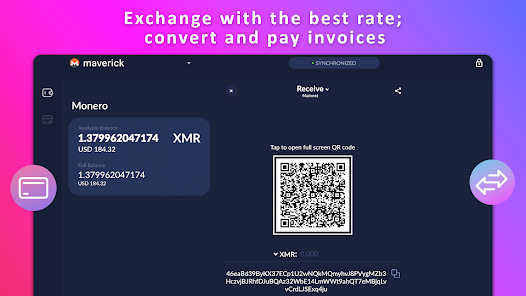
How Monero changed the meaning of a private transaction
Early cryptocurrency privacy discussions often focused on hiding a user’s identity behind a pseudonymous address. That model is weaker than it sounds. If an address is connected to a person through an exchange withdrawal, a public donation page, or repeated payment patterns, observers may be able to study the address’s balance and transaction history. Bitcoin’s ledger is transparent by design: the amounts and movements are publicly inspectable, even when names are not written directly on-chain.
Monero approaches the problem at the transaction level. Stealth addresses help prevent a sender from simply seeing a reusable public destination on the ledger. Ring signatures obscure which input in a group was actually spent, making ownership inference more difficult. Ring Confidential Transactions, commonly called RingCT, conceal transaction amounts while allowing the network to verify that the arithmetic is valid. These mechanisms work together; privacy is not produced by a single “anonymous address” switch.
The sharper mental model is that Monero aims to reduce the usefulness of public transaction data, rather than erase every trace of an economic event. Network observers may still see that a device is communicating with a node. A merchant may know who made a purchase. An exchange may retain identity and account records. A compromised phone can expose wallet data, and a user who voluntarily links several payments through behavior can weaken the protection provided by the protocol. On-chain privacy and off-chain privacy are related, but they are not interchangeable.
Why a mobile Monero wallet is both useful and exposed
A mobile wallet changes the security equation because the phone is a general-purpose computer. It may receive operating-system updates, connect to public Wi-Fi, display notifications, store screenshots, and run many third-party applications. The advantage is immediate control: a user can create transactions without leaving private keys on an exchange. The cost is a larger operational surface than a purpose-built signing device or an offline setup.
Monero wallets also need access to blockchain data. Some mobile designs connect directly to a user-operated node; others use a remote node or a service that supplies chain information. A remote node can improve convenience and reduce storage and bandwidth demands, but it may learn the wallet’s network address, timing patterns, or queries. That does not automatically defeat Monero’s on-chain protections, yet it creates a metadata risk. Privacy-conscious users should ask not only “Are my coins private?” but also “Who can observe my wallet’s connection, and how much do they learn from it?”
This is where a cake wallet download can be evaluated as a starting point for software research rather than treated as a guarantee. Before installing any wallet, users should verify that the source is authentic, review permissions, examine backup and recovery procedures, and understand whether the application supports the assets and network model they intend to use. The brand or interface matters less than the controls around seed storage, transaction confirmation, node selection, and software updates.
Multi-currency convenience versus privacy compartmentalization
Managing Monero, Bitcoin, and other cryptocurrencies in one mobile application can reduce cognitive load. One backup routine, one interface, and one place to review balances may prevent errors caused by juggling unfamiliar tools. It can also make portfolio management more practical for ordinary users who do not want a separate specialist wallet for every asset.
But a unified wallet does not create unified privacy. Bitcoin and Monero have different ledger models, address practices, fee dynamics, and recovery expectations. A user who becomes accustomed to Bitcoin’s transparent transaction history may incorrectly assume that Monero works in the same way, or may reuse habits that create unnecessary links between accounts and services. In addition, one compromised phone or exposed recovery phrase can place every supported asset at risk.
Compartmentalization is therefore a legitimate alternative, not a sign of technical sophistication for its own sake. A user holding a small spending balance might reasonably prefer a mobile multi-currency wallet, while larger long-term holdings may justify separate storage and a more deliberate signing process. The appropriate boundary depends on value, frequency of use, recovery ability, and the consequences of device loss. Convenience is a security feature only when it reduces mistakes without making the entire financial footprint dependent on one failure point.
What anonymous transactions cannot solve
Privacy technology does not remove the need for lawful financial records. In the United States, a person may still have tax, accounting, or reporting obligations associated with cryptocurrency activity, depending on the facts and applicable rules. A private ledger does not make income disappear, and a wallet should not be selected on the assumption that it provides immunity from compliance duties. Privacy can protect ordinary users from unnecessary public exposure while leaving legitimate records available to the people and institutions entitled to maintain them.
There are also practical limits to user behavior. Sending funds to a service that identifies the customer can connect the transaction to an account. Publicly announcing a payment, using a recognizable amount, or repeatedly transacting at predictable times may create clues. A private protocol can make analysis harder without making behavioral analysis impossible. The protection is probabilistic and contextual, not magical.
Recovery presents another boundary condition. A wallet’s seed phrase is usually the decisive control over funds. Storing it in a cloud note, photographing it, or entering it into an unverified website can undermine sophisticated protocol privacy in seconds. On a phone, users should consider whether the seed is written offline, whether backups are tested without exposing the phrase, and whether anyone else can access the screen or device. A lost password may be inconvenient; a lost recovery phrase can be permanent.
A practical framework for choosing a privacy wallet
Start with the threat model. If the concern is casual public balance tracking, Monero’s protocol-level privacy may be highly relevant. If the concern is a stolen phone, the priority is device security, passcode protection, and recovery discipline. If the concern is network surveillance, node choice and connection privacy deserve more attention. If the concern is exchange records or tax documentation, a wallet alone cannot address the issue.
Next, test the wallet’s operational clarity. Can the user distinguish receiving and spending addresses? Does the app explain fees and confirmation status? Does it make the recovery phrase visible only during secure setup? Can the user select or understand its node configuration? Does it support the intended assets without forcing risky conversions through an opaque service? These are mundane questions, but financial losses often arise from confusing interfaces rather than from failures in cryptography.
Finally, separate privacy from custody. A wallet may give users control of private keys, but self-custody transfers responsibility for backups, updates, approvals, and fraud detection to the user. A non-custodial design can reduce dependence on an exchange, yet it cannot prevent a user from authorizing a malicious transaction. For substantial balances, a cautious approach may involve a dedicated device, smaller mobile spending limits, and independent verification of important payment details.
What to watch next
The next stage of mobile privacy wallets will likely be shaped less by slogans about anonymity than by the quality of metadata protection and user education. If wallets make node choices, backup state, address handling, and transaction context easier to understand, privacy may become an observable practice rather than a marketing label. If they hide these decisions behind convenience, users may gain a smoother interface while remaining uncertain about who can see what.
The useful conclusion is conditional. A mobile Monero wallet can be a strong tool for reducing public transaction visibility, especially when paired with careful self-custody and disciplined network practices. It is not a complete privacy system, and a multi-currency wallet is not automatically safer or less safe than separate applications. The sound choice is the one whose mechanisms and limitations the user can explain before trusting it with funds.
Frequently asked questions
Are Monero transactions completely anonymous?
No. Monero is designed to provide strong transaction privacy on its blockchain by obscuring important relationships and amounts, but network metadata, exchange records, device compromise, and user behavior can still reveal information. “Private by default” is more accurate than “invisible under every circumstance.”
Is a mobile crypto wallet suitable for storing Monero and Bitcoin?
It can be suitable for everyday spending and moderate balances if the phone, application source, recovery phrase, and transaction process are managed carefully. For larger holdings, users should consider stronger compartmentalization, tested backups, and storage arrangements that reduce the consequences of a single lost or compromised phone.
Does holding Monero and Bitcoin in one wallet combine their privacy?
No. Each network retains its own transaction model. A shared interface may simplify management, but it does not give Bitcoin Monero-style privacy, nor does Monero inherit Bitcoin’s transparency. Users should evaluate each asset separately and avoid assuming that one wallet interface means one privacy standard.